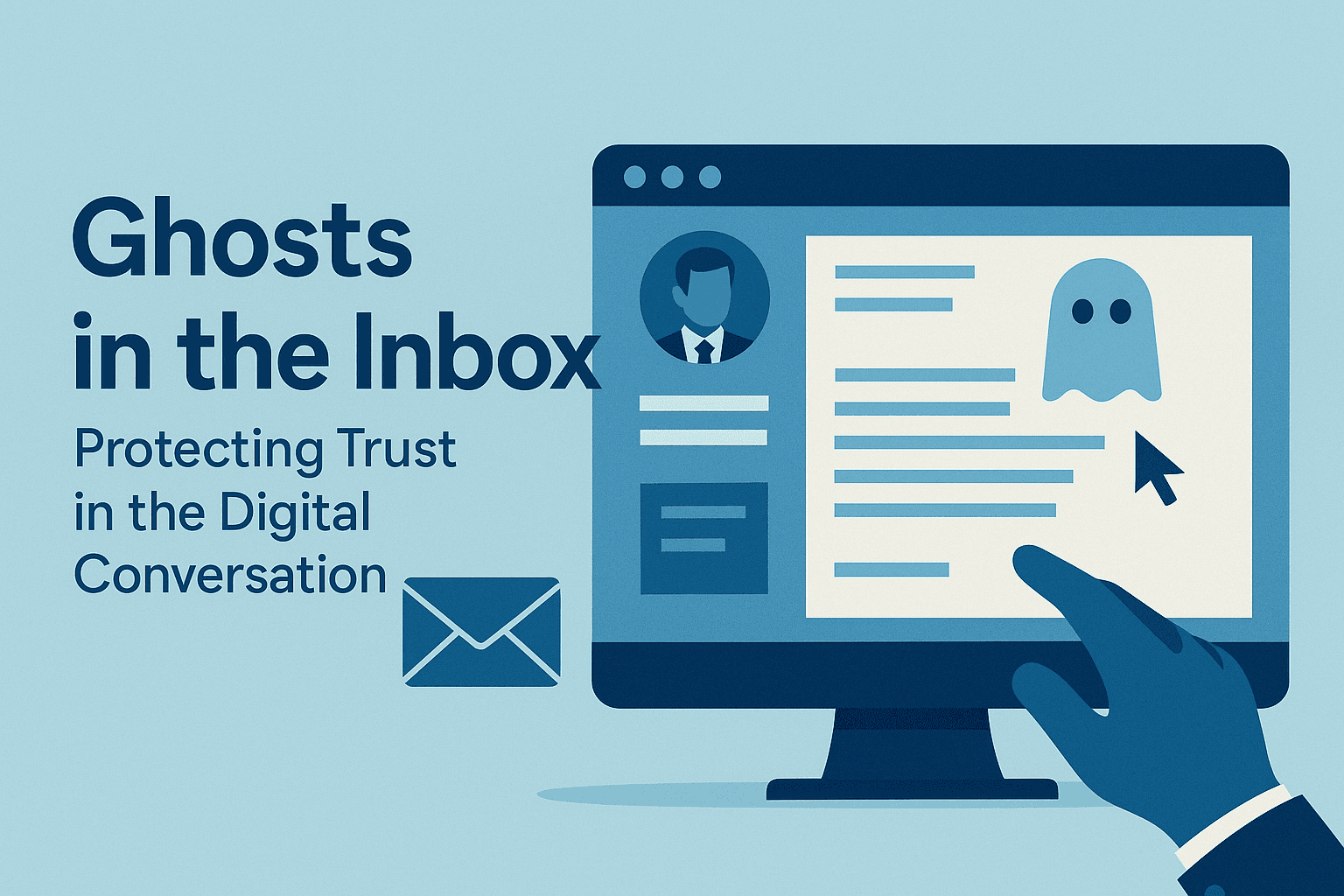
Ghosts in the Inbox: How Email Spoofing Targets Influence and Trust
The Familiar Trap You receive an email from your business partner, your law associate, or your financial advisor. It looks perfect—signature, tone, even the subtle phrasing that only someone you know would use. Except it isn’t from them...
The Familiar Trap
You receive an email from your business partner, your law associate, or your financial advisor. It looks perfect—signature, tone, even the subtle phrasing that only someone you know would use.
Except it isn’t from them.
This is the sophistication of modern email spoofing—where attackers no longer impersonate “Nigerian princes,” but trusted colleagues and professional networks. Their goal isn’t volume; it’s precision. They’re not after thousands of victims—they’re after you.
For high-net-worth individuals, senior partners, and wealth managers, the inbox is no longer just a communication tool. It’s a weapon—wielded against trust.
How Spoofing Actually Works
1. Identity Manipulation
Attackers forge or “spoof” the “From” field in an email, making it appear as though it’s sent from a legitimate contact. In many cases, they register look-alike domains—changing a single letter or substituting similar characters (for example, valethorncybersecurity.com vs valeth0rn.com).
2. Thread Hijacking
In more advanced cases, hackers gain access to one of the real accounts involved. They then reply within ongoing email threads—continuing legitimate conversations seamlessly before redirecting a wire transfer or sharing a malicious link.
3. Payloads That Bypass Scanners
Rather than obvious attachments, spoofed messages often use innocuous-looking links to compromised cloud documents—Google Drive, SharePoint, or Dropbox—that contain the actual payload.
4. Psychological Targeting
Emails mimic your communication rhythms, known projects, or assistant correspondence. Attackers may even time their messages to your time zone and office hours.
Signs You’re Being Targeted
The sender’s address is “close but not exact.” Look for subtle letter swaps.
Tone feels slightly “off”—too formal, too urgent, or unusually casual.
Requests for payment, wire transfers, or confidential files arrive unexpectedly.
“Reply-To” addresses differ from the “From” field.
A link or file prompts for login credentials before showing content.
How to Defend Yourself
Use custom domain verification (SPF, DKIM, DMARC) to authenticate your outbound messages.
Enable domain monitoring to detect and report fraudulent look-alike registrations.
Educate staff and family—spoofing often begins with someone around you.
Verify sensitive requests by voice or separate communication channel.
Segment email accounts—use different addresses for financial, legal, and personal correspondence.
Deploy advanced filtering that uses AI-based pattern recognition rather than simple keyword detection.
Why Concierge Protection Matters
Spoofing thrives on human familiarity—it preys not on ignorance but on trust.
At Valethorn Cybersecurity, we specialize in securing those trust channels.
Our concierge service continuously monitors your personal and professional email ecosystems for impersonation attempts, domain lookalikes, and unauthorized account forwarding.
We don’t just stop malicious emails—we prevent them from ever reaching you.
We also train your inner circle—assistants, family members, and trusted advisors—because true security extends to everyone who carries your name, reputation, or correspondence.
Final Reflection
Influence is power, and in today’s digital landscape, power attracts predators.
Your inbox may look safe—but invisible threats wait between the lines.
Modern attackers don’t need to break your passwords—they just need to borrow your identity long enough to cause irreversible damage.
Stay vigilant. Protect your voice. Guard your trust.