The Hidden Risks of Personal Digital Exposure for Executives and High-Profile Professionals
Most executives and high-exposure professionals assume cybersecurity begins and ends with their company’s IT department. Firewalls are in place, corporate devices are managed, and security awareness training exists.
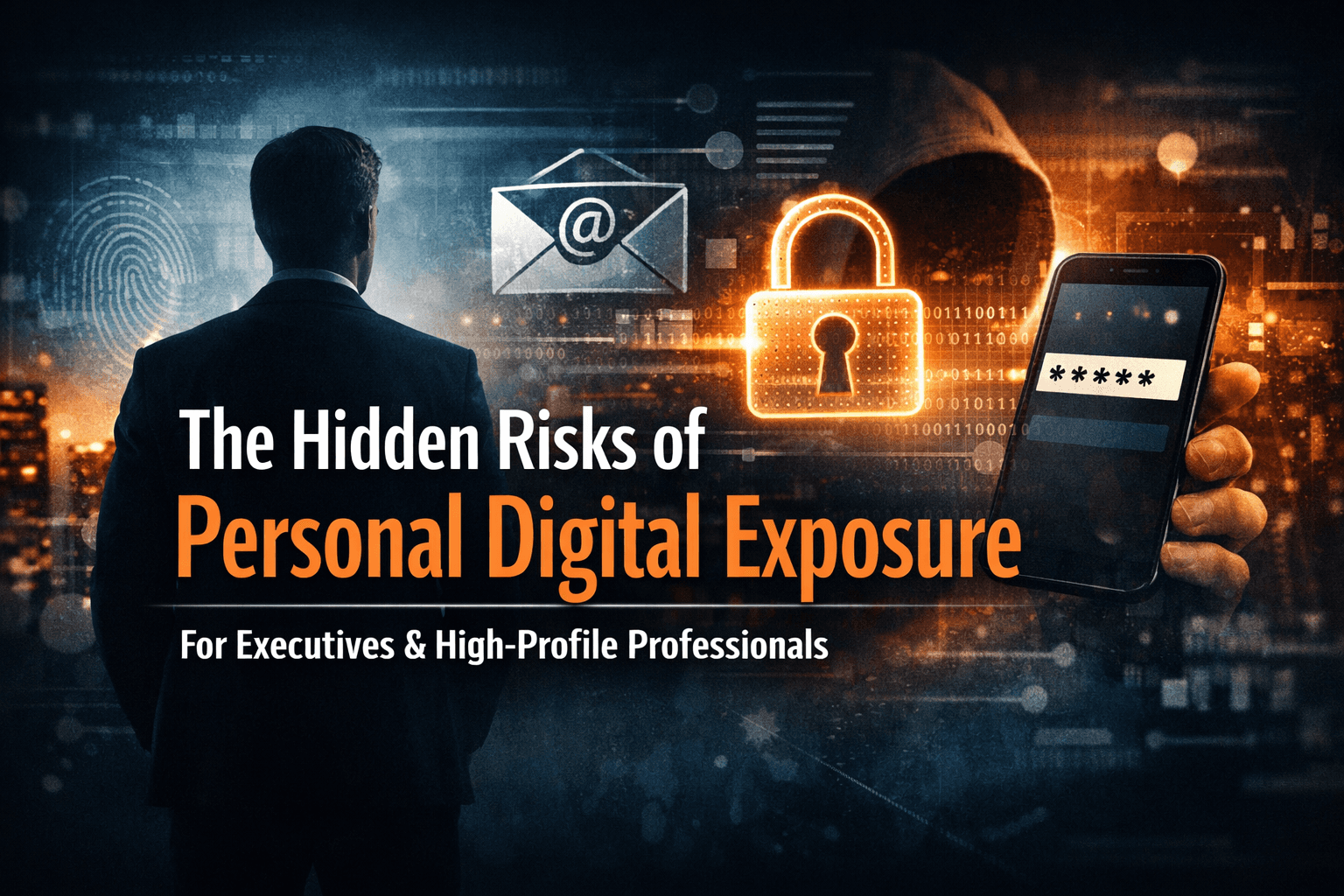
Most executives and high-exposure professionals assume cybersecurity begins and ends with their company’s IT department. Firewalls are in place, corporate devices are managed, and security awareness training exists. Yet the greatest vulnerabilities rarely live inside the organization. They live in personal devices, private accounts, and everyday habits that fall outside traditional enterprise protection.
Personal digital exposure has quietly become one of the most overlooked risk areas for professionals whose names, roles, or reputations make them attractive targets.
Why Personal Security Is the New Front Line
Cybercriminals increasingly focus on individuals rather than organizations. Attacking a corporate network requires navigating layers of security controls. Targeting a person’s personal email, phone, or cloud storage is often far easier.
Executives, attorneys, entrepreneurs, and public-facing professionals share several characteristics that increase risk:
High public visibility
Access to sensitive conversations or relationships
Financial leverage or decision-making authority
Large digital footprints built over years of online activity
A single compromised personal account can expose private communications, travel plans, family information, or confidential discussions that were never meant to be public.
The Most Common Blind Spots
Even security-conscious professionals frequently overlook these areas:
1. Personal Email Accounts
Many professionals maintain older email accounts tied to social media, subscriptions, or personal contacts. These accounts often lack strong authentication or consistent monitoring, making them prime entry points.
2. Cloud Storage and Photo Backups
Automatic backups from phones and laptops can contain sensitive screenshots, documents, or personal information. Once access is gained, attackers may collect months or years of private data in minutes.
3. Password Reuse Across Personal Services
While corporate policies enforce strong passwords, personal accounts are often managed informally. Reusing a password across multiple platforms increases the likelihood that a single breach leads to wider compromise.
4. Public Data Aggregation
Information brokers and data aggregation sites compile addresses, relatives, and historical data. This information enables social engineering attempts that feel highly personalized and believable.
5. Unsecured Home Networks
Professionals invest heavily in corporate security but rarely review home network configurations. Weak router settings, outdated firmware, or poorly segmented devices can create unexpected vulnerabilities.
Why Traditional Security Models Fall Short
Enterprise security focuses on protecting organizations, not individuals. Personal devices and accounts sit outside corporate visibility, leaving a gap between professional and private life.
This gap creates several challenges:
No centralized monitoring of personal risk
Limited awareness of digital exposure
Fragmented tools that are difficult to manage alone
As a result, many high-exposure individuals assume they are secure because their workplace is secure. In reality, attackers often bypass organizations entirely by targeting the individual behind the role.
Early Warning Signs of Personal Exposure
Recognizing potential issues early can prevent larger incidents. Some common indicators include:
Unexpected password reset notifications
Increased spam or phishing messages
Unknown logins from unfamiliar locations
Social media accounts sending messages without your knowledge
Personal data appearing on unfamiliar websites
These signals are often dismissed as minor inconveniences, yet they may indicate ongoing reconnaissance or attempted access.
Practical Steps to Reduce Personal Risk
Improving personal cybersecurity does not require complex technical knowledge. A structured approach can significantly reduce exposure.
Strengthen Authentication
Use a reputable password manager to generate unique passwords for each account. Enable multi-factor authentication wherever possible, especially on email and financial services.
Review Digital Footprints
Search for your own name periodically and identify where personal information appears publicly. Removing outdated listings from data broker sites can reduce targeted attacks.
Separate Personal and Professional Accounts
Avoid linking business identities to personal services when possible. Segmentation limits the damage if one environment is compromised.
Secure Home Technology
Update routers and connected devices regularly. Change default passwords and disable unnecessary remote access features.
Build a Personal Security Routine
Security works best when it becomes a habit rather than a reaction. Periodic reviews of accounts, devices, and settings help maintain long-term resilience.
Moving Toward a Proactive Mindset
Personal cybersecurity is no longer optional for professionals whose visibility or influence places them at higher risk. The goal is not perfection but awareness and consistency. Small, intentional changes create layers of protection that discourage opportunistic attackers.
Organizations invest heavily in protecting infrastructure. Individuals deserve the same level of attention for their personal digital lives.
Professionals who take a proactive approach to personal security often find greater peace of mind, knowing that their private world is no longer an easy entry point for external threats.
If personal digital exposure is a concern, consider evaluating your current habits, devices, and online presence through a structured security review. Small adjustments today can prevent significant problems later.