The Price of Privacy: Why Luxury Homes Are the Next Cyber Battleground
When Your Home Becomes the Network Your home is your refuge—a space designed for security, serenity, and control. But for the modern luxury homeowner, that same environment has quietly evolved into a digital battlefield. Every lighting system...
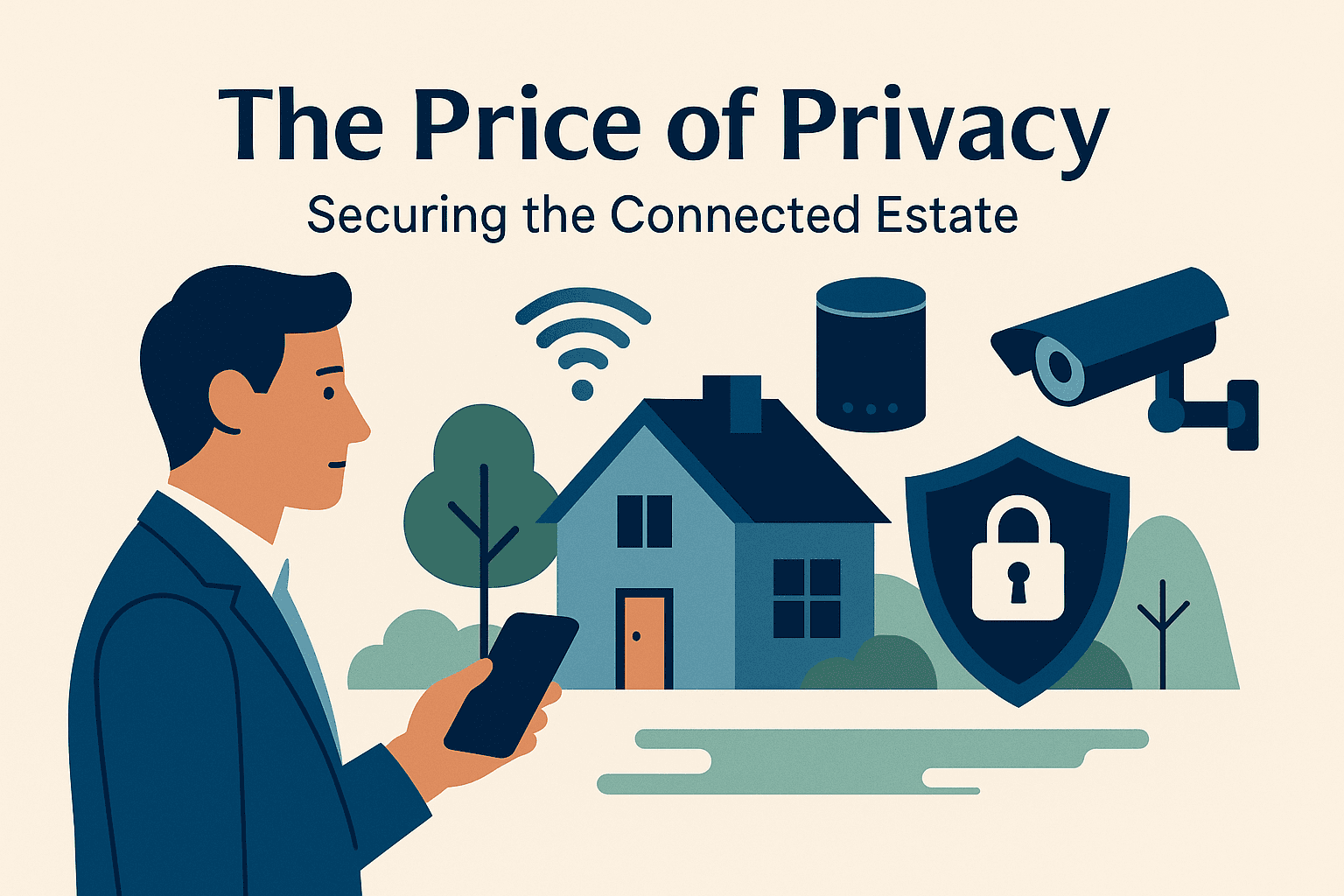
When Your Home Becomes the Network
Your home is your refuge—a space designed for security, serenity, and control. But for the modern luxury homeowner, that same environment has quietly evolved into a digital battlefield.
Every lighting system, climate control, security camera, and virtual assistant represents a potential entry point. These aren’t isolated gadgets—they’re part of a single, connected ecosystem. And like any network, it’s only as secure as its weakest link.
In the past decade, cybercriminals have shifted focus from corporations to the individuals behind them. High-net-worth households are now prime targets—not because their networks are complex, but because they’re personal.
How Cybercriminals Breach Smart Estates
1. Compromised Home Automation Hubs
Luxury homes often use central control systems that manage lighting, locks, entertainment, and more. If the control hub is unpatched or misconfigured, attackers can gain full remote access—sometimes without triggering alerts.
2. Vendor and Installer Oversight
Third-party vendors often retain default credentials or remote access for “support.” Those forgotten logins become open invitations for intrusion, especially when installers reuse passwords across multiple clients.
3. Insecure Security Cameras
Ironically, your home security system may be your biggest privacy risk. Many cameras transmit data through the cloud using minimal encryption, allowing attackers to intercept live feeds or archived footage.
4. Voice Assistants and Smart Speakers
Devices that “always listen” are exactly what sophisticated social engineers dream of. They can be manipulated to capture commands, gather information, or even trigger other connected devices.
5. Smart Locks and Entry Systems
Convenient? Yes. Secure? Not always. Many Bluetooth or Wi-Fi-based locks can be bypassed with signal replay attacks or exploited through outdated firmware.
Practical Defenses for the Connected Home
Create network separation: Isolate IoT devices from personal computers, phones, and financial systems using VLANs or a dedicated router.
Disable remote vendor access: Ensure all third-party accounts are removed after installation or maintenance.
Change default credentials immediately: Every camera, thermostat, or hub should have unique, complex passwords.
Perform quarterly firmware audits: Update or replace devices that no longer receive manufacturer security patches.
Install a home intrusion detection system: Modern setups can detect abnormal device behavior or network anomalies.
Engage a personal cybersecurity concierge: Continuous oversight ensures even subtle vulnerabilities are detected before exploitation.
The Valethorn Standard
At Valethorn Cybersecurity, we specialize in securing luxury residences from digital intrusion. Our concierge approach doesn’t stop at devices—we assess entire ecosystems: home networks, staff devices, security integrations, and automation systems.
We ensure your home operates with the same precision and protection as a Fortune 500 executive’s command center—without sacrificing comfort or convenience.
Our clients enjoy privacy not just from the outside world, but from the invisible data brokers, cloud vendors, and automation backdoors that most never know exist.
Closing Thought
Modern luxury is intelligent, automated, and connected. But with every smart upgrade comes an unseen cost: exposure.
True comfort comes not from technology itself—but from knowing it’s secure.
When your home thinks for you, it’s time to make sure someone’s thinking about its security, too.